Dominican Republic: Santo Domingo

February 2026
Back in the late 80s Brian and I lived in Washington Heights, Manhattan. [see: Colonel Robert Magaw Place]. In those days, the neighborhood was heavily Dominican. Although the area was considered "rough and dangerous", all the Dominicans we met were unfailingly kind and pleasant. Throughout my adult life, I met people who traveled to the DR and told me "you have to go". Brian and I were always interested in places "far away", so it never got on our radar.
Finally, in the time of my life where I did many cruises in a row, I made a "land stop" in the DR. I was most interested in seeing the old part of the city, the Zona Colonial. Staying there turned out to be a great decision. My only regret was not having visited sooner.
Getting there
After the colder-than-expected cruise to Hawaii followed by three cold, rainy days in San Francisco, I needed a warm break. The whole point of my travels was to escape the winter in the Northeast and I felt like it kept reaching out to me no matter where I went! I took the BART train to San Francisco Airport (my first visit - very user-friendly), flew to Fort Lauderdale for a couple of hours, and then changed to a flight to Santo Domingo.
Upon arrival a very stern and unfriendly immigration officer asked me for my immigration ticket. I had no idea what she was talking about. Apparently, the DR did away with arrival and departure forms (not that long before) and they had to be filled out online to obtain a QR code prior to flying. Unfortunately, Jet Blue did not inform me of that - likely because I was on a connecting flight. Since I am an "old guy", the immigration officer did it for me on the spot (she was not happy). It was not an auspicious beginning.
Upon collecting my bags, I messaged my hotel transfer driver who told me to meet him at an ice cream shop called "Bon". I looked around the arrivals area - no shop. I called him and he told me to go outside (of course, this is all pushing the limits of my Spanish to the limit). Across a few rows of traffic I saw the shop. I guessed that rather than park the car and waste time, he would just stop there and pick me up (as many others were doing). Finally, he showed up and I jumped in the car. In the end, I didn't mind, but I had paid (a lot) to have my name on a little signboard and be greeted upon exit. Again, I felt like - what is going on?
The highway into the city parallels the sea most of the way and the views are beautiful. I started to relax. I was tired after a red-eye from San Francisco and then the flight from Fort Lauderdale.
Gran Hotel Europa
We crossed the Ozama River on an old floating bridge that leads right into the old city. Immediately I felt like I was back in Old San Juan: narrow streets, too many cars, very old buildings. Finally, we arrived at the hotel. A Wyndham property, it looked very retro. I checked in quickly and went to my lovely, large room. At least my hotel was going to be OK, but ironically, the only window was in the bathroom (it was large). That turned out to be a blessing. The street noise was awful (not to mention from the corridors). I was happy to have the bathroom as a buffer. A room right on the street would have been terrible.
Exploring
I found a place to change money (with a guy who used to live in Washington Heights and returned to Santo Domingo to establish a successful money changing business). After that I met a travel agent for some advice on day trips. I started to feel settled.
I was very cautious at first since Santo Domingo is supposedly a "rough place". Undoubtedly, that is true for some parts of the city. It is NOT true for the Zona Colonial, which is filled with tourists (many from Europe and Latin America) drawn by its old streets and low prices. To protect the tourists (who spend a LOT of money), the government places "Tourist Police" throughout the zone. It felt like there were Politur on virtually every corner. I am not sure that made me feel "safe", but it made me understand that the Dominican government wanted visitors to one of its prime attractions not to worry about security. Soon I came to realize that the Zona Colonial (ZC) was not going to be a place requiring "hyper-vigilance".
Parque Independencia
At the end of the pedestrianized Calle El Conde (lined with shops and restaurants) stands Puerta del Conde, one of the old gates through the mostly-demolished city walls. Just beyond it is Santo Domingo's premier memorial to its founding fathers - complete with an honor guard. I was impressed!

houses
Santo Domingo was founded in the early 16th century and has gone through boom and bust several times. The old city did not grow much beyond the city walls for centuries. At times it was nearly abandoned and then would again be redeveloped. Spanish colonial as well as pure Spanish styles predominate (along with a few old wooden relics from those who were not "rich"). Worth noting: Santo Domingo is now the largest metropolitan region in the Caribbean.


Malecon
Santo Domingo has a seafront esplanade, but the part in front of the Zona Colonial is not that popular. The views are lovely and it is well kept. The main problem is a busy road cuts it off from pedestrian access. Crossing that street takes an act of bravery. Having lived in Manhattan trained me in crossing busy streets "anywhere".

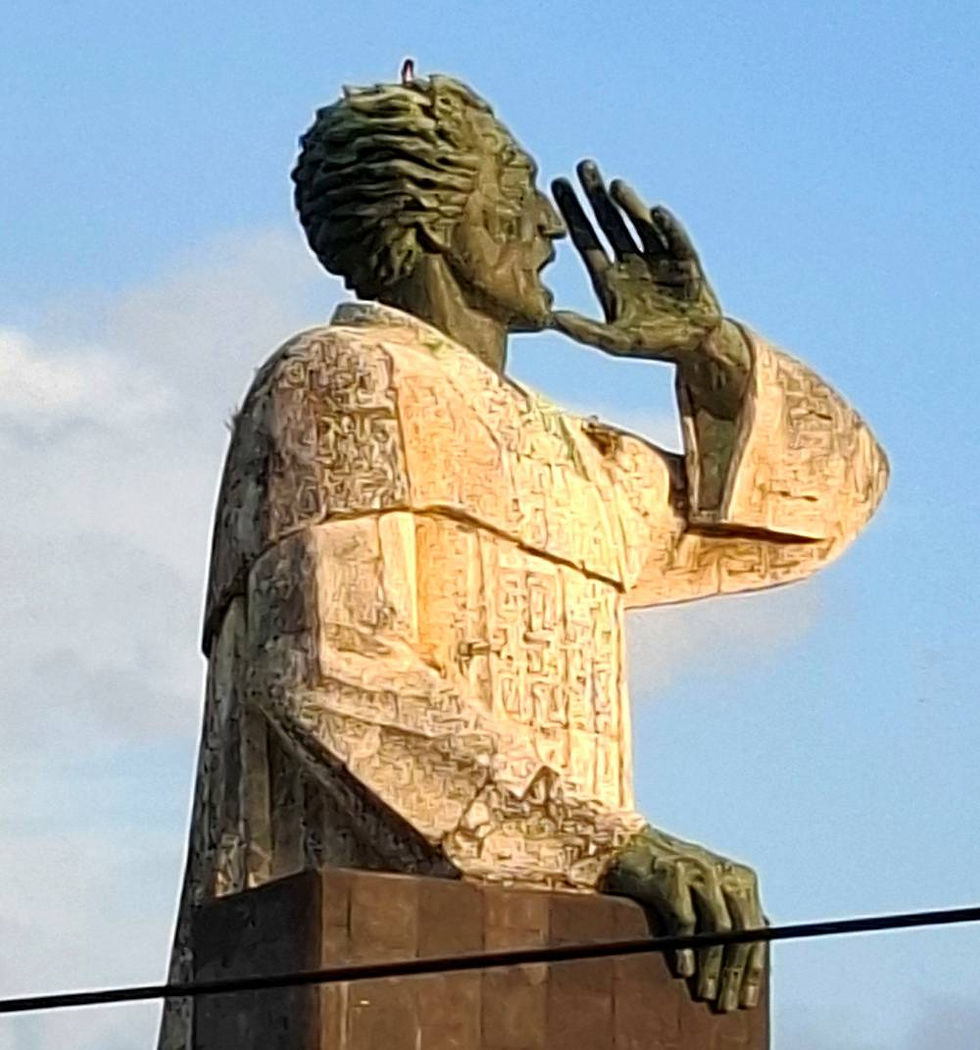
I noticed a large statue in the seaside park and wanted to take a closer look. In a part of the park overlooking both sea and statue I met two school kids (in uniforms). I banked on their knowing English - they did. I asked about the statue and they told me he was one of the priests who originally came with Columbus (the first governor of Santo Domingo). Fray Antón de Montesinos fought for the rights of the indigenous people (Taino). Yay for Father Antón.
The number of cultural centers in the ZC is amazing: Spanish, French, German, and Russian!

The street signs are beautiful, too.
(and yes, Queen Isabel, no one forgot you were Catholic)

Some of the facades are illuminated at night, too.

One of the early churches of the city is Catedral Castrense de Santa Bárbara. It might be the most beautiful, too (and is not visited much since it is at the edge of the ZC).


Near Santa Barbara (and within view of my hotel) are the ruins of a Franciscan Monastery. It was mostly closed off for renovation (stabilization).


I didn't have time to visit this museum dedicated to the Taino people. Next visit, perhaps. They are such a tragic footnote in New World colonial history.

Along the riverfront are a series of fortifications (the port was in the river's mouth by the sea). They are all well-maintained. In fact, Columbus' Castle (Alcazar) was under complete renovation and was closed (sadly).

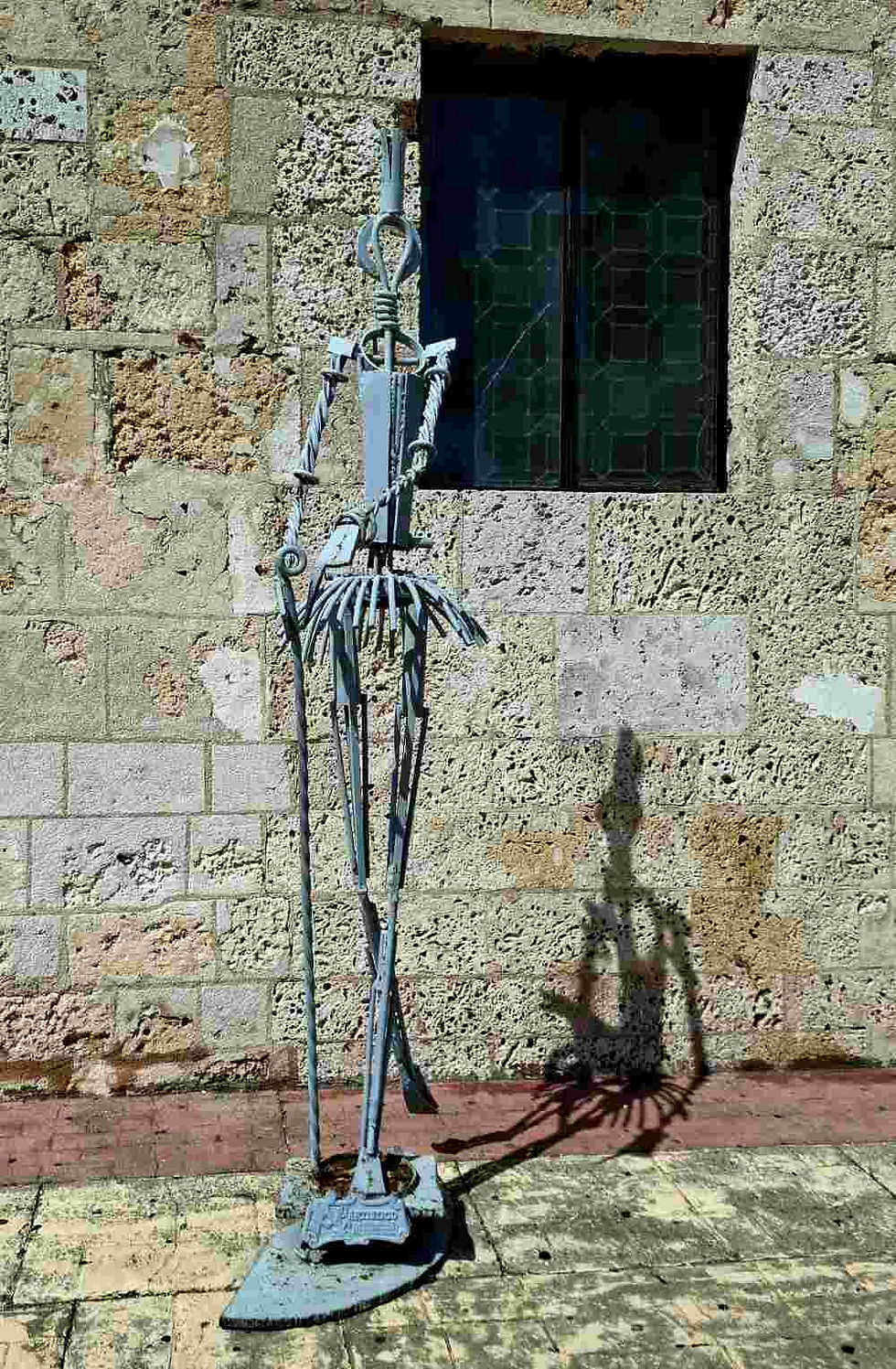

As Paris has a Pantheon for its glorious war heroes, so does the Dominican Republic. Like the monument to the founding fathers, it is a place of reverence with an honor guard and an eternal flame. Tourists are reminded to keep silent and show respect. The location is in a former church (ZC has an abundance of churches). Again, I was impressed.


Some of the cenotaphs are large, plain marble slabs. I believe they are reserved for "future heroes/leaders".
In the plaza surrounding the Fortaleza (the principle fortress of the old city) stands a statue of Gonzalo Fernández de Oviedo y Valdés. Although Columbus' crew were not known for their kindness to the natives, Oviedo keenly observed all around him and wrote it down in one of the few existing insights into pre-Colombian life in the Caribbean.
Gonzalo Fernández de Oviedo y Valdés (August 1478 – 1557), commonly known as Oviedo, was a Spanish soldier, historian, writer, botanist and colonist. Oviedo participated in the Spanish colonization of the West Indies, arriving in the first few years after Christopher Columbus became the first European to arrive at the islands in 1492. Oviedo's chronicle Historia general de las Indias, published in 1535 to expand on his 1526 summary La Natural hystoria de las Indias (collectively reprinted, three centuries after his death, as Historia general y natural de las Indias), forms one of the few primary sources about it. Portions of the original text were widely read in the 16th century in Spanish, English, Italian and French editions, and introduced Europeans to the hammock, the pineapple, and tobacco as well as creating influential representations of the colonized peoples of the region.
(Wikipedia)

The Fortaleza should be everyone's first stop in Santo Domingo. It provides a brief (excellent) series of narrations on the history of the city. I learned more there about the Dominican Republic than I had in the past 40 years.


Small parts of the city bastions remain along the former course of the walls (Avenida Mella and Calle Palo Hincado)

Fuerte de la Concepción
The number of functioning churches (mostly old) across the ZC is amazing for such a small area.
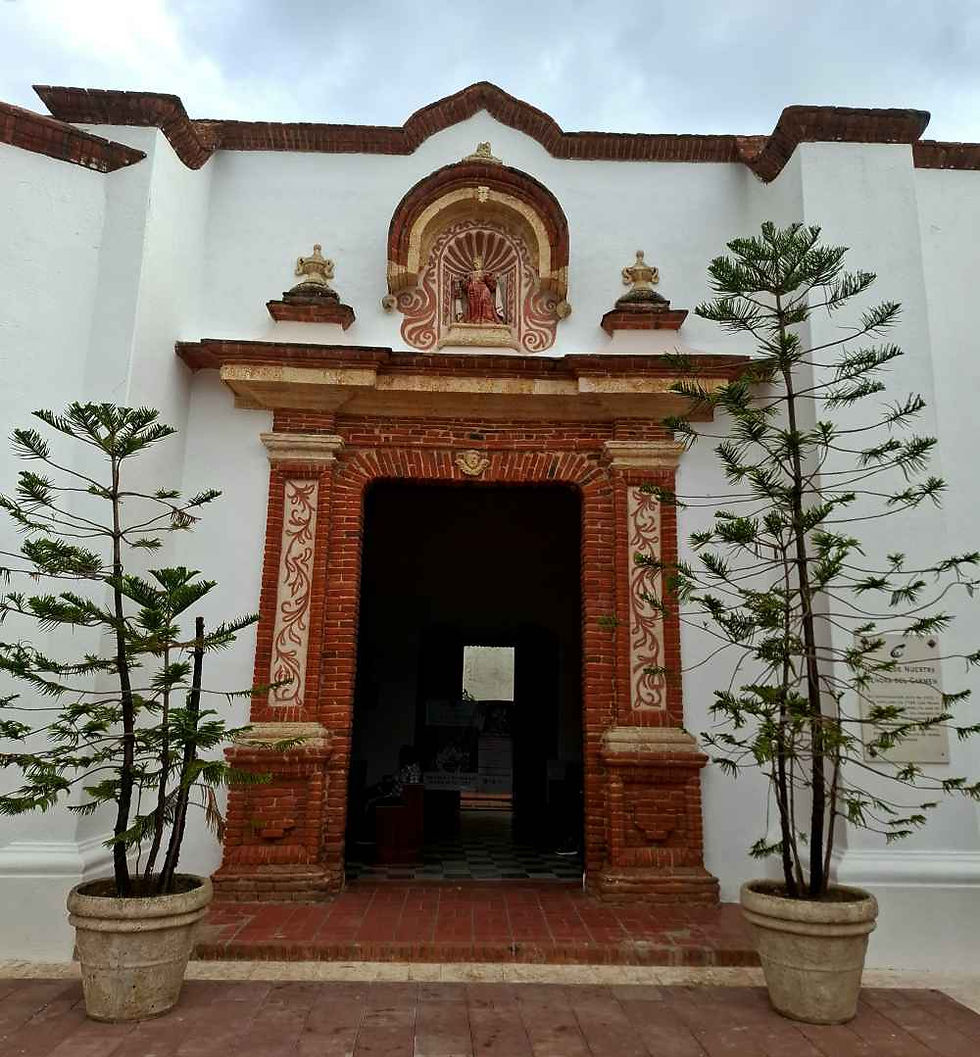

Another old gateway into the city (recently renovated)

Puerta de la Misericordia
Art galleries abound through the ZC ranging from small collections on loan from Europe (the Prado had copies of famous paintings posted across the city as an exhibit) to local artists selling their creations to visitors.

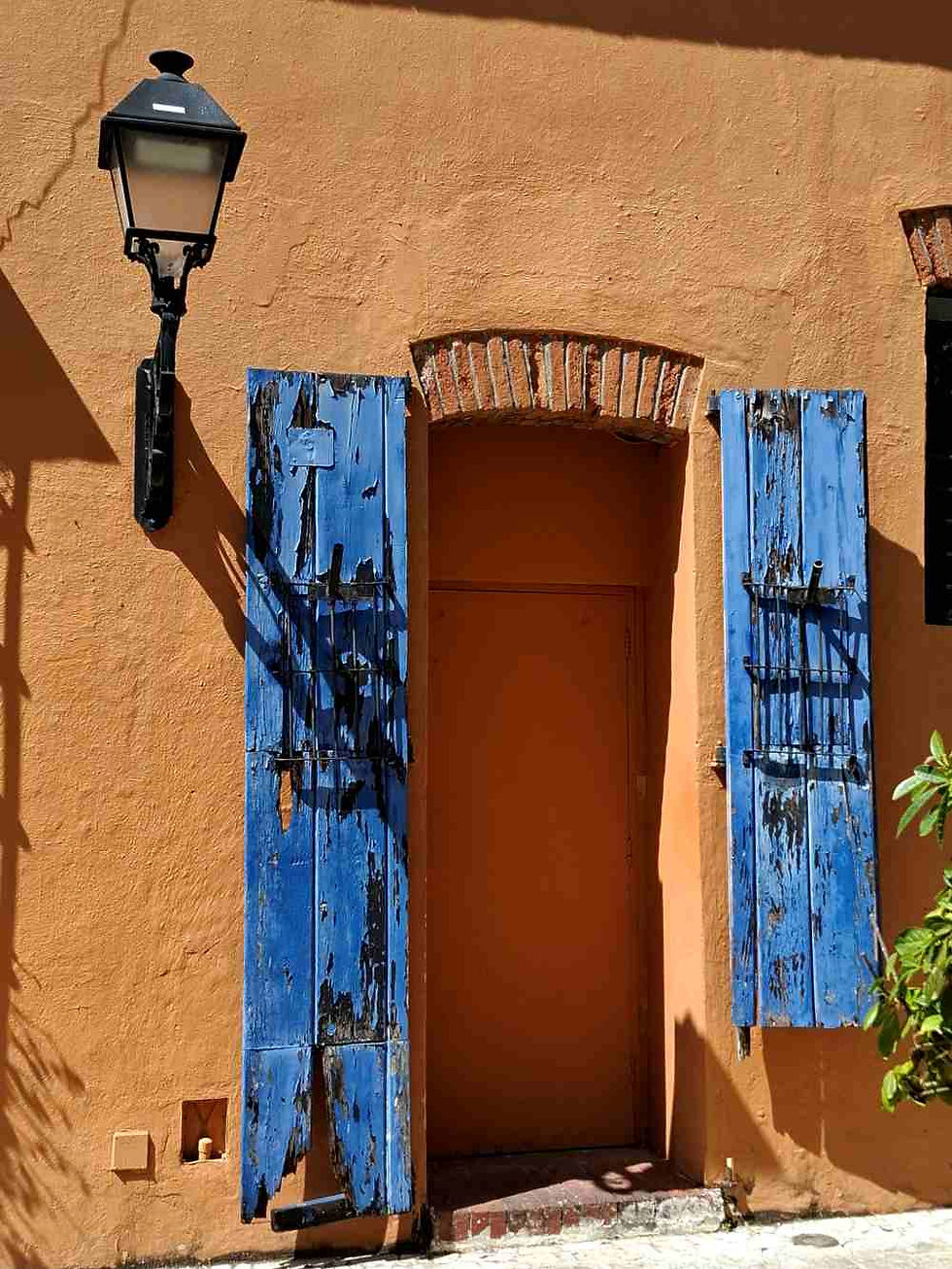
Some of the building exteriors themselves looked like pieces of art.
The actual cathedral of the city is "towerless" and its gargoyles have been removed to a nearby street as an art installation themselves. The interior of the church is impressive, but mostly austere. Nuestra Señora de la Encarnación could be easily overlooked if a tourist didn't understand what it was even though it is located on the main plaza of the old city. It was one of the least "church looking" cathedrals I had ever visited.


I walked all of the main east-west streets of the ZC to make sure I didn't miss anything. In doing so, I was given a glimpse into the lives of locals (and stumbled upon old buildings here and there). Given the security, I am certain the people who live there must feel "safer" to a degree that others do not (although I am only conjecturing). ZC has everything needed for daily life - it is not Venice. The Zona Colonial is still just another neighborhood in Santo Domingo. It could develop 50% more and likely have little effect on its residents. I assume the people living there either own their places or are locked into some kind of rent control. It must hold some of the most valuable real estate in the country.
Takeaway:
I wished I hadn't waited so long to visit, although going as a senior was quite easy. Most important for me was learning the history of the place (of which I only knew bits and pieces). The importance of Santo Domingo cannot be underestimated. I understood a lot more by the end of my stay (and I enjoyed that). Other parts of the city are modern. The neighborhoods of the wealthy likely have private security rendering them "safe", but the ZC has everything a tourist might need. It is much more expensive than the rest of the country (incredibly so), but for visitors - it is still a bargain.
I found a good coffee shop and a decent brew pub. The number of restaurants is staggering. The city is pedestrian-friendly and not very "hassley" (people were not constantly bothering me to buy things or come into their shops). In my estimation, it could "gentrify" even more and that might be a good thing.
My only big negative was the traffic on its narrow streets. The city might do well to invest in more public parking spaces for residents and make more streets no parking (or even pedestrian). The number of cars in the old city is overwhelming and detracts from the experience.
All in all, it was an excellent side trip and I was happy I went there rather than one of the resort cities.
Zona Colonial, Santo Domingo - check. A+

Comments